
v0.1.0 — Early Release
Last updated August 2026
The first public release of Portis, an adaptive TCP port scanner designed for high-latency and unstable networks.
i
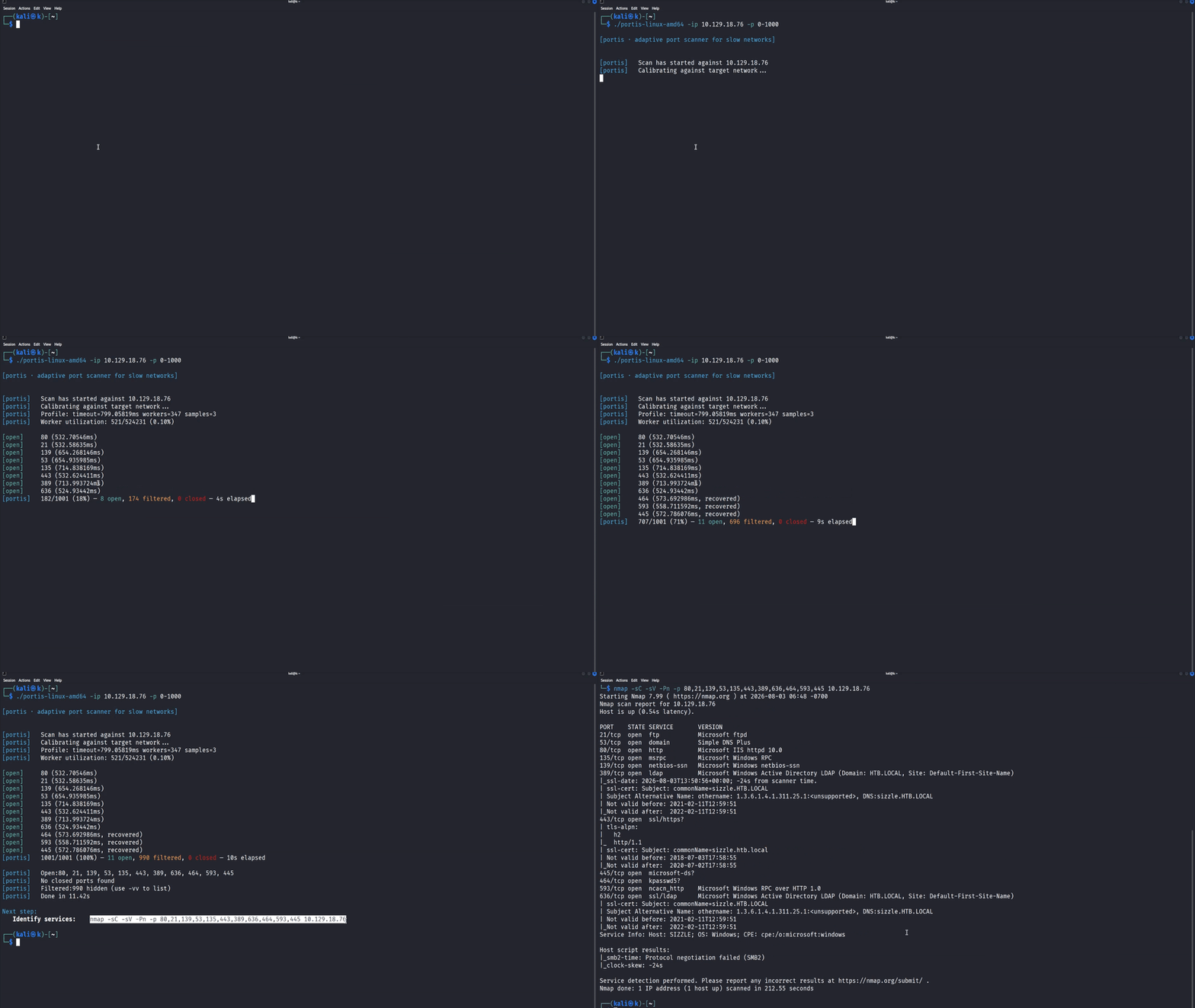
Portis measures the network before scanning, then automatically configures concurrency, timeouts, and retry behavior.
Features#
- Adaptive network calibration
- Concurrent TCP connect scanning
- Automatic retries for uncertain responses
- Port ranges, lists, top ports, and full-range scanning
- Machine-readable JSON output
- Suggested nmap handoff command for service enumeration
Installation#
Download portis-linux-amd64 and checksums.txt from the latest GitHub release.
Terminal
$ sha256sum -c checksums.txt
$ chmod +x portis-linux-amd64
$ sudo mv portis-linux-amd64 /usr/local/bin/portis
$ portis -h
Quick start#
Run Portis against a host you own or are explicitly authorized to test.
Terminal
$ portis -ip 10.0.0.5 -port 1-1000Platform#
- Linux AMD64
- No root privileges required
- IPv4 TCP connect scanning
How it works#
Portis calibrates against the target network, scans ports concurrently using the observed conditions, rechecks uncertain responses, and prints an nmap command containing only confirmed open ports.
Early-release note
Full-range scanning remains experimental. Further accuracy, performance tuning, broader testing, and feature upgrades are planned.
PreviousWelcomeNextGitHub Releases→